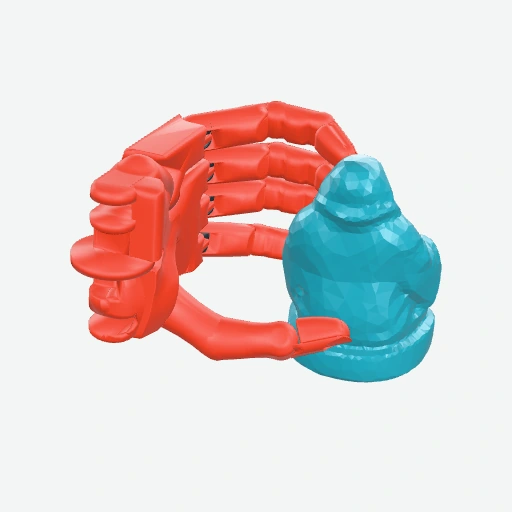
Small statueall8.usd · 0252
Scalable Keypoint Flow Matching for Dexterous Grasp Generation
CoRL 2026(Spotlight)
1Peking University · 2Galbot · 3Xi'an Jiaotong University · 4Tsinghua University
Drag to explore each grasp, or pause the rotation for a closer look.
Small statueall8.usd · 0252
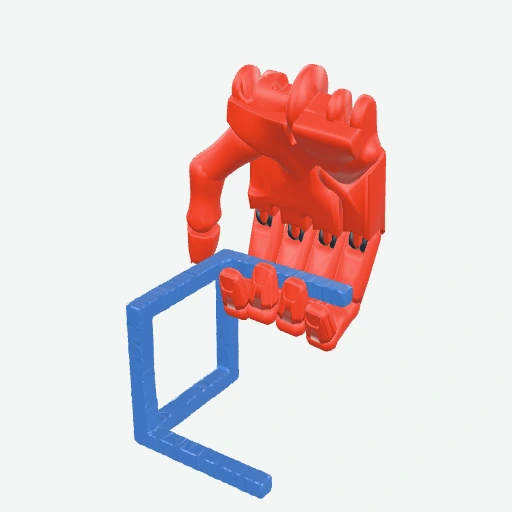
Open frameall10.usd · 0077
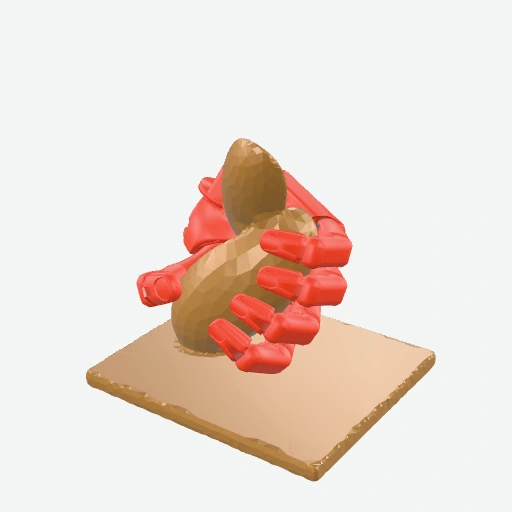
Plate and baseall10.usd · 0078
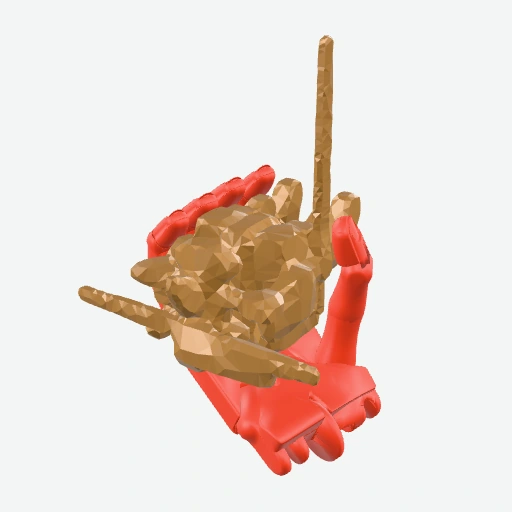
Mechanical structureall6.usd · 0114
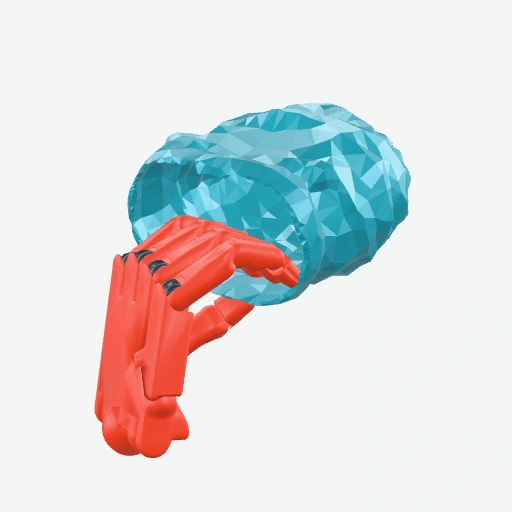
Ring sculptureall6.usd · 0000
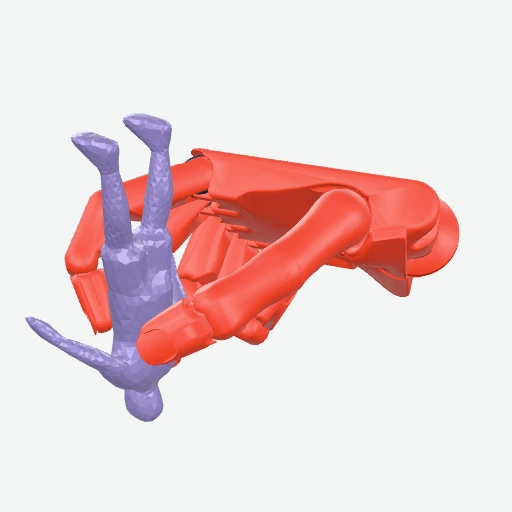
Articulated toyall10.usd · 0111
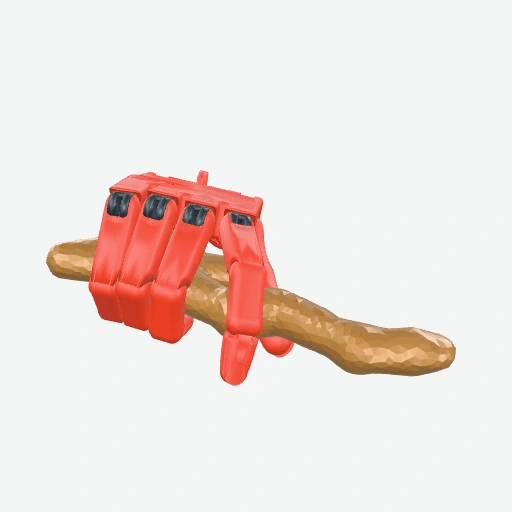
Guitar-shaped objectall10.usd · 0218
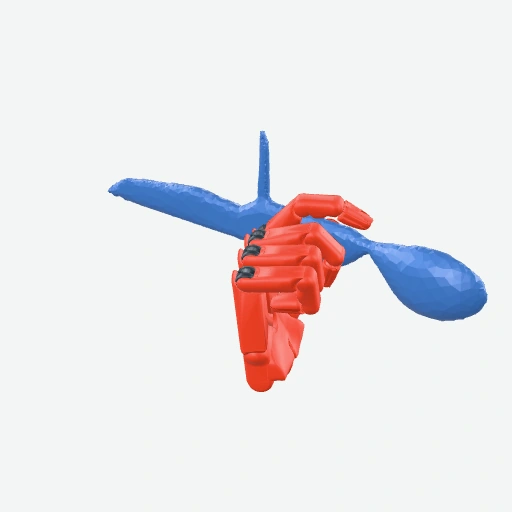
Wing-shaped structureall10.usd · 0169
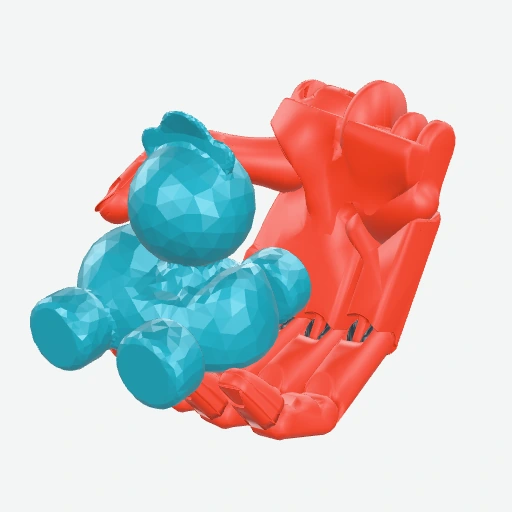
Chicken racerall10.usd · 0264
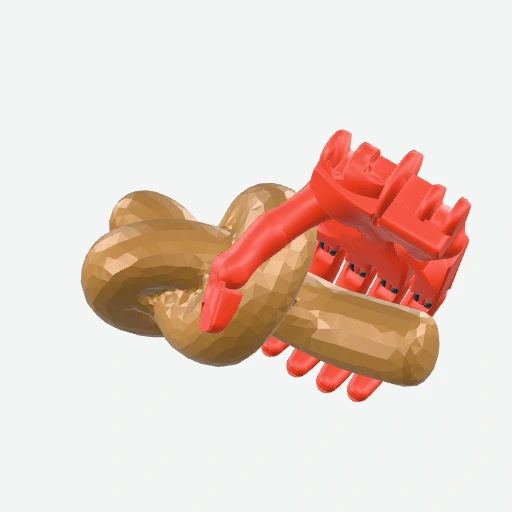
Knot sculptureall7.usd · 0370
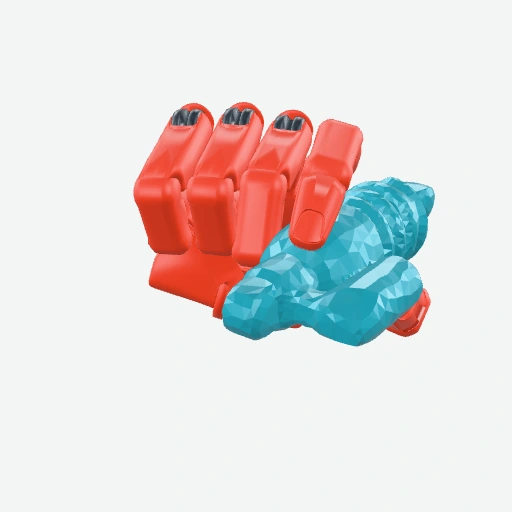
Multi-lobed objectall10.usd · 0096
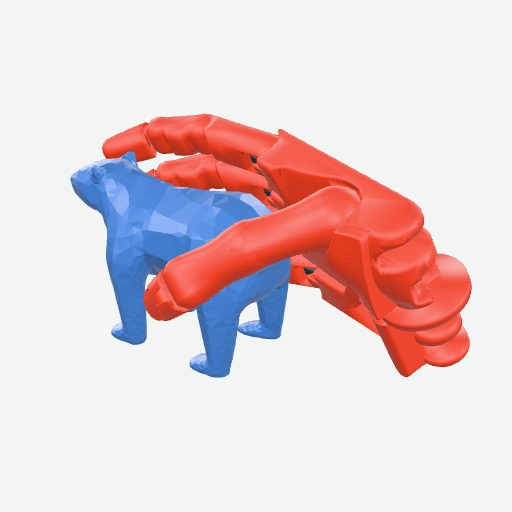
Bearall10.usd · 0337
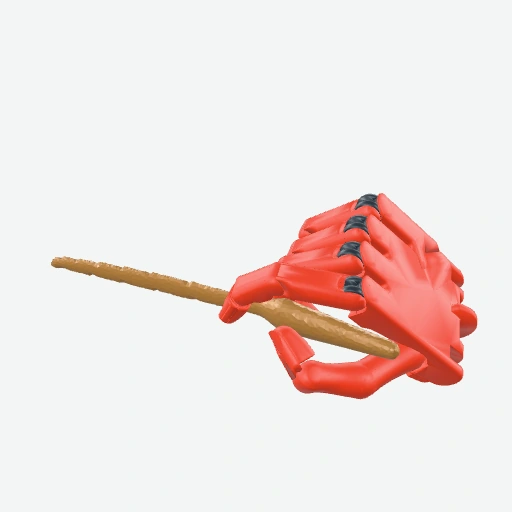
Slender toolall10.usd · 0094
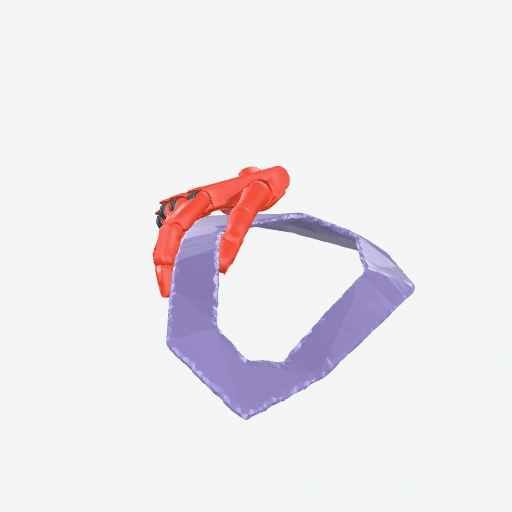
Polygonal ringall10.usd · 0199
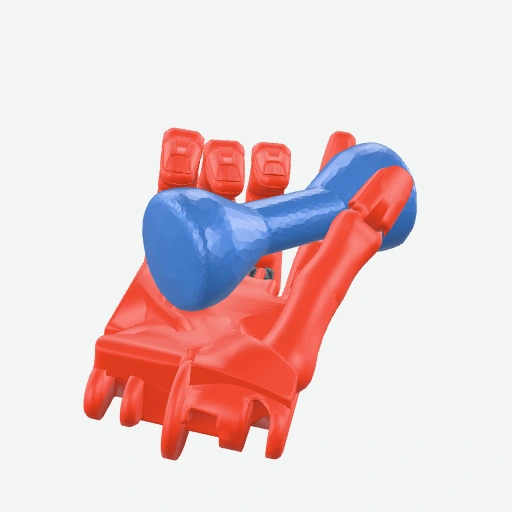
Dumbbellall9.usd · 0305
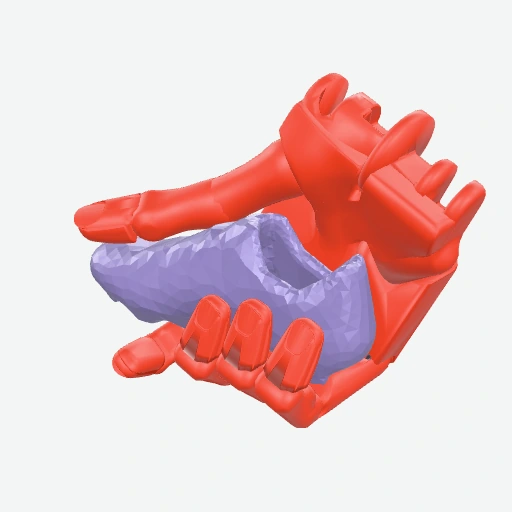
Athletic shoeall8.usd · 0199
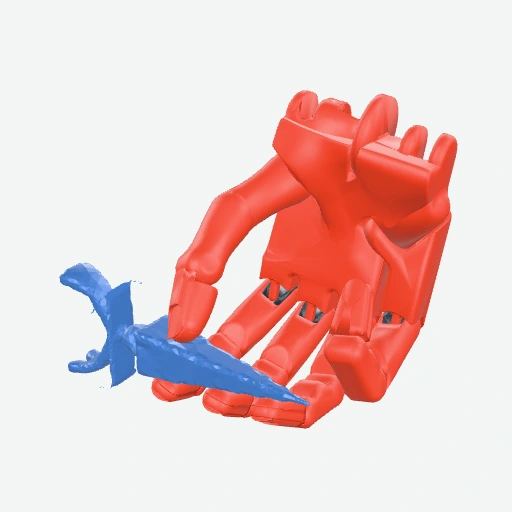
Long-limbed figureall10.usd · 0249
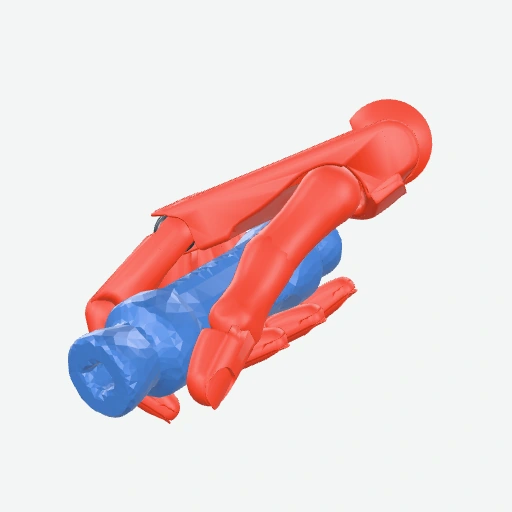
Tubular connectorall10.usd · 0221
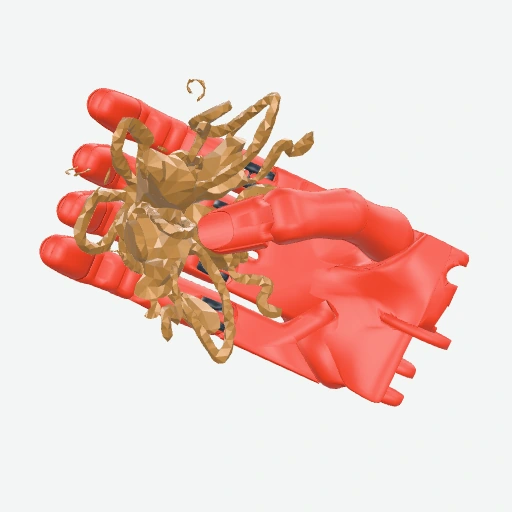
Tentacled sculptureall7.usd · 0230
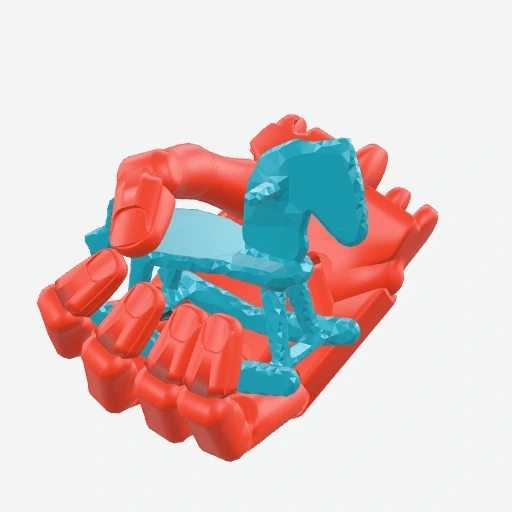
Rocking horseall8.usd · 0012
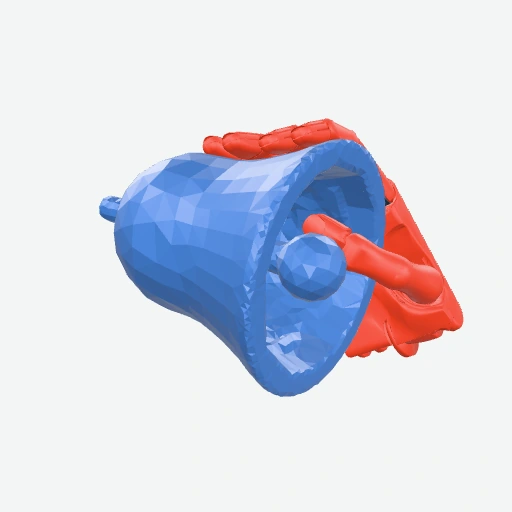
Bell-shaped objectall9.usd · 0313
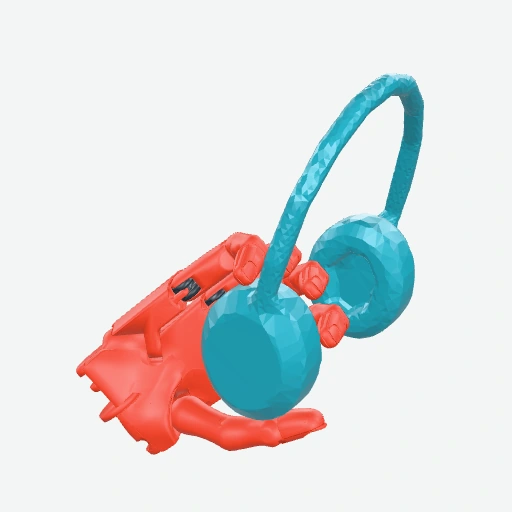
Headphonesall8.usd · 0348
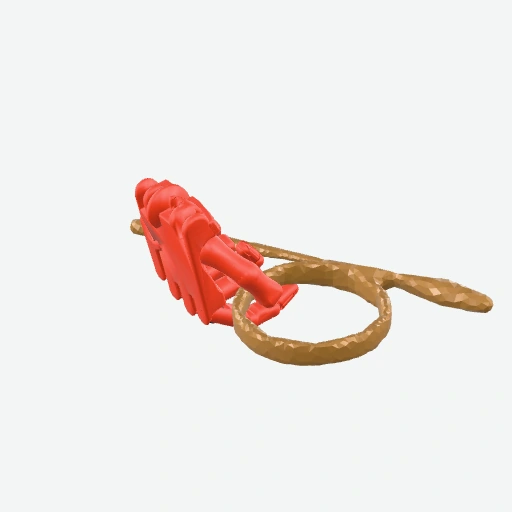
Curved loop handleall7.usd · 0178
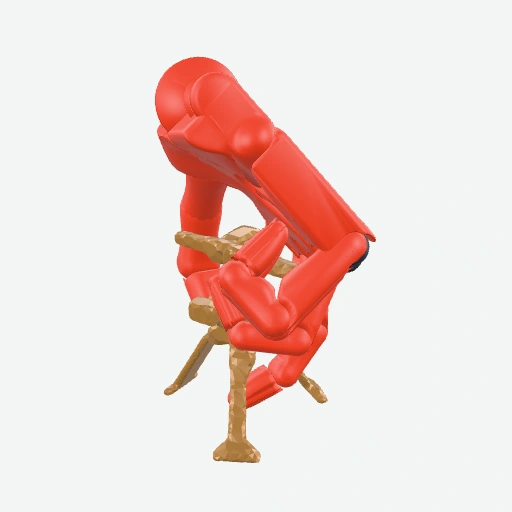
Tripod-shaped toyall10.usd · 0302
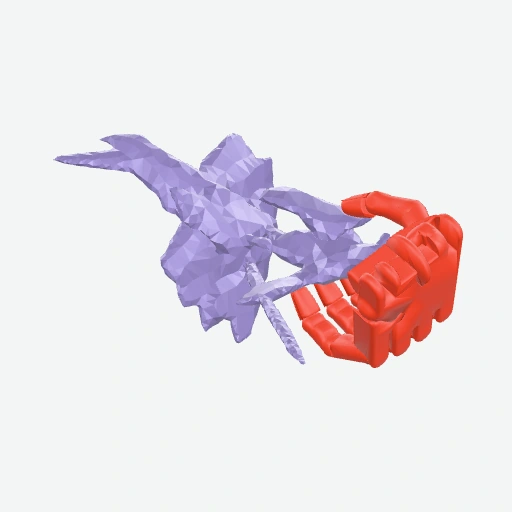
Winged sculptureall10.usd · 0331
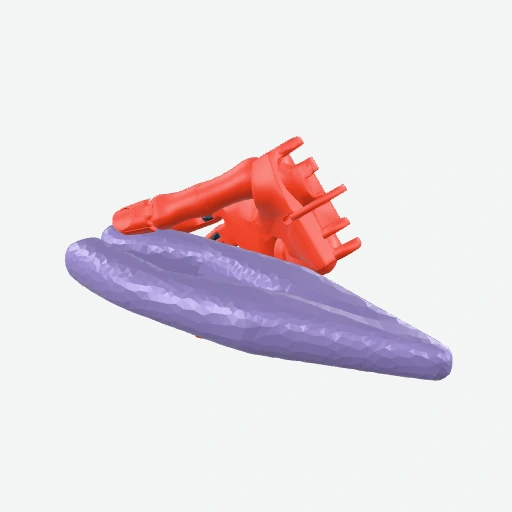
Pliersall10.usd · 0131
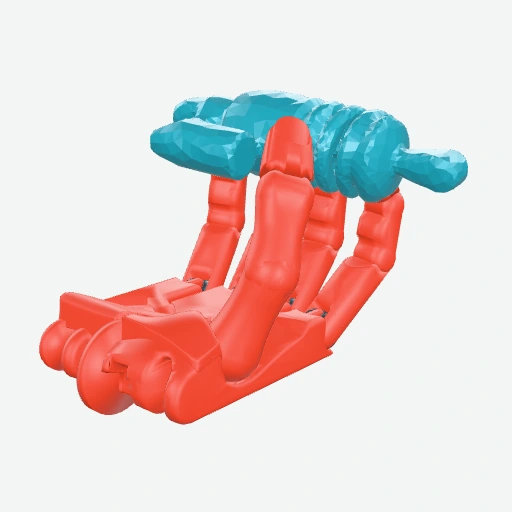
Spiral sleeveall10.usd · 0496
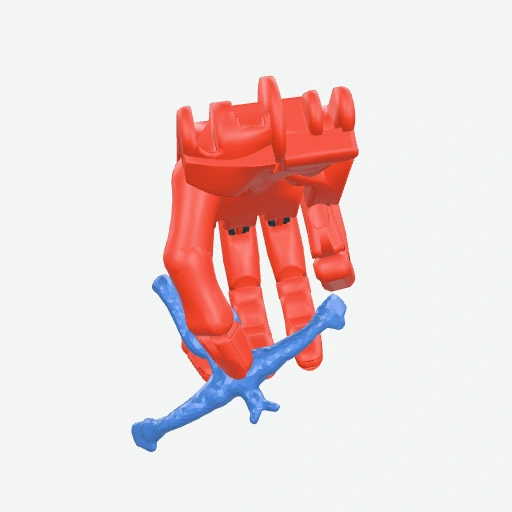
Branched figureall10.usd · 0237
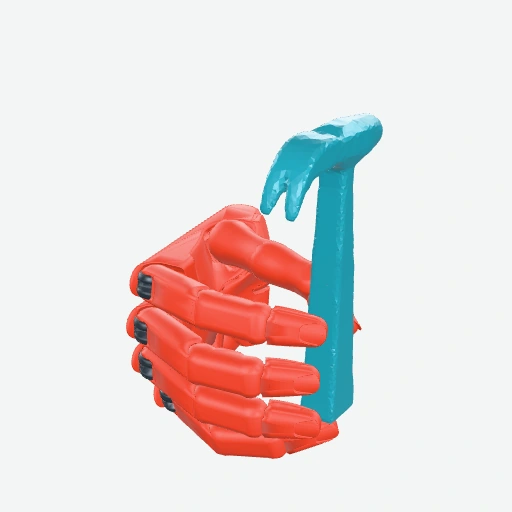
Claw hammerall8.usd · 0376
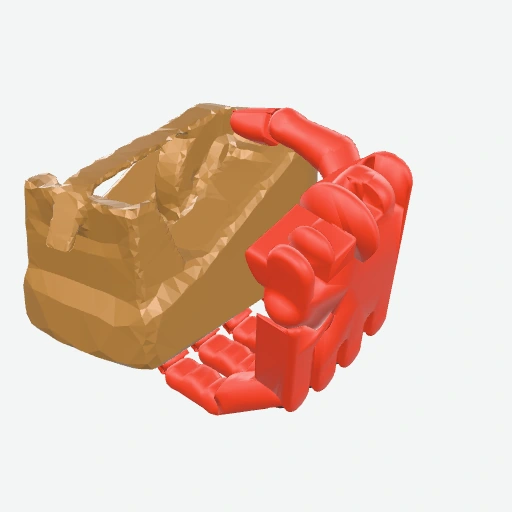
Tape dispenserall5.usd · 0054
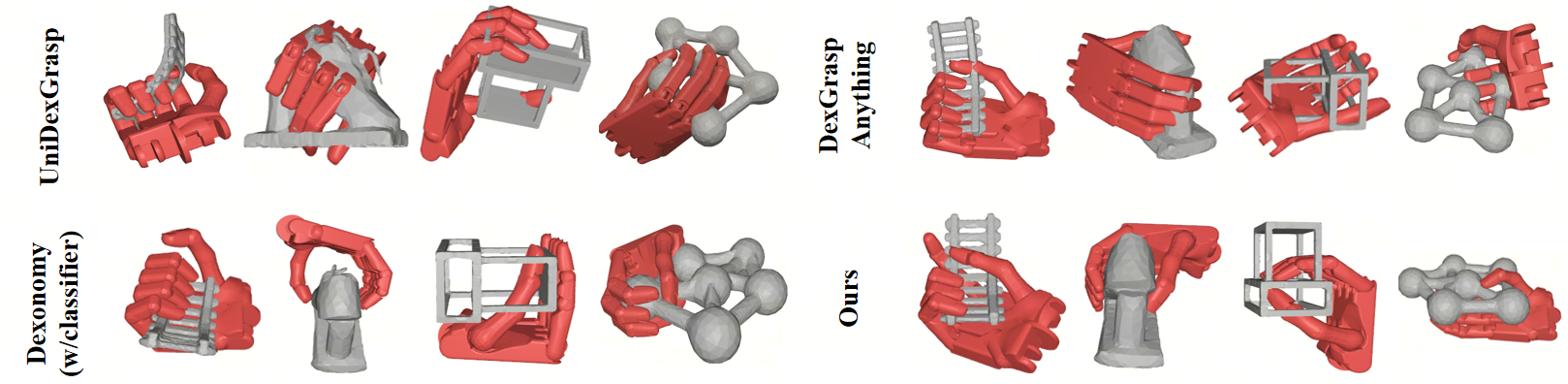
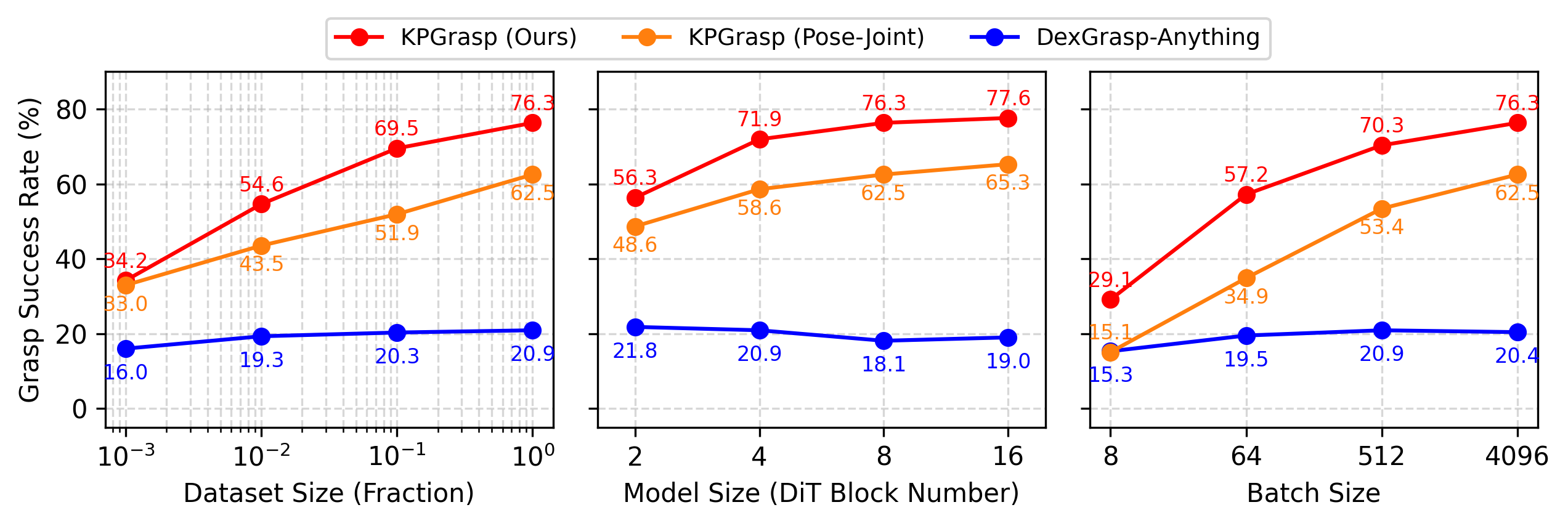
Generating high-quality dexterous grasps remains challenging for learning-based methods, which often depend on carefully tuned contact losses or costly contact-based test-time refinement. We present KPGrasp, a flow-matching framework that learns dexterous grasp priors from large-scale data rather than relying on contact losses or contact-based test-time refinement. KPGrasp couples an all-Euclidean 3D hand-keypoint parameterization with a simple yet scalable Transformer flow model. The parameterization avoids the drawbacks of the conventional mixed SE(3) pose and joint-angle output space, expresses grasps in the same frame as the object point cloud, and thus enables native spatial reasoning; the Transformer flow model is trained with only the standard flow-matching loss and scales effectively with data, model capacity, and batch size. Experiments demonstrate state-of-the-art performance on two simulation benchmarks. On the Dexonomy benchmark, it reaches a 76.3% grasp success rate, improving over the strongest directly comparable baseline by 47.4% while reducing penetration depth to 2.4 mm. The same model also achieves the best average performance on the DexGrasp Anything benchmark without fine-tuning. For batched inference, KPGrasp requires only 0.032 s per grasp. Finally, real-world experiments on 20 diverse objects demonstrate that the pipeline can be deployed in a real-world setup.
KPGrasp represents an articulated hand with 21 Euclidean keypoints and learns an object-conditioned flow model for grasp generation.
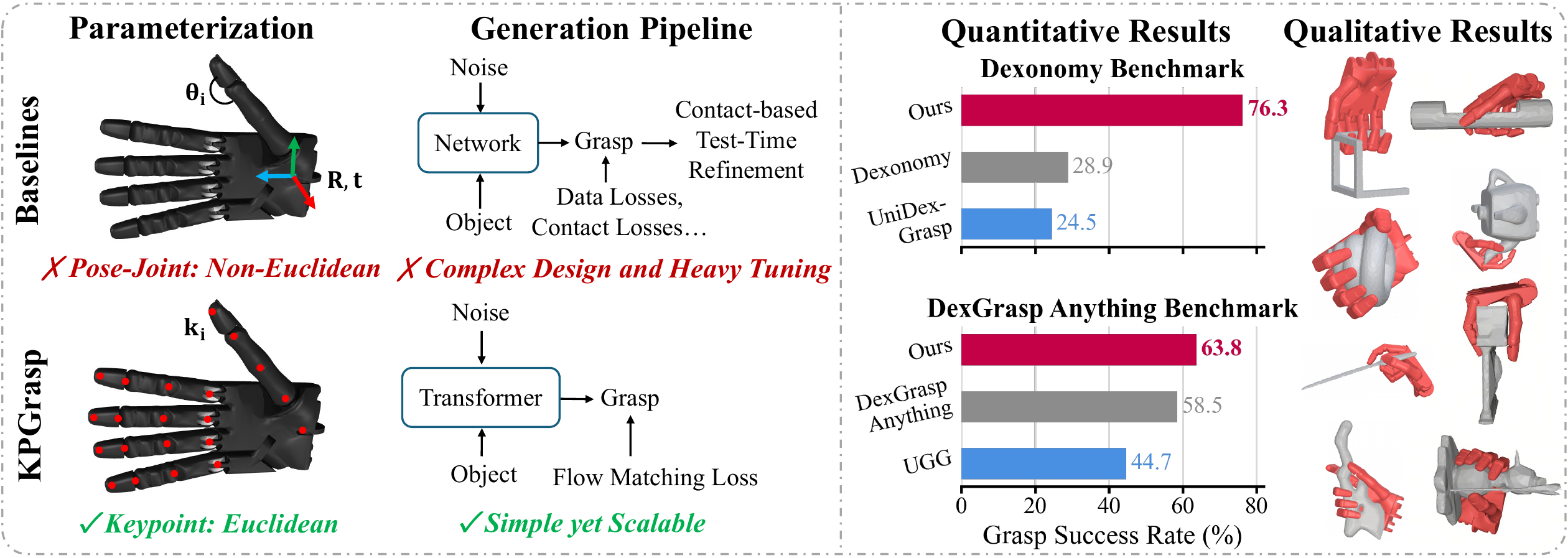
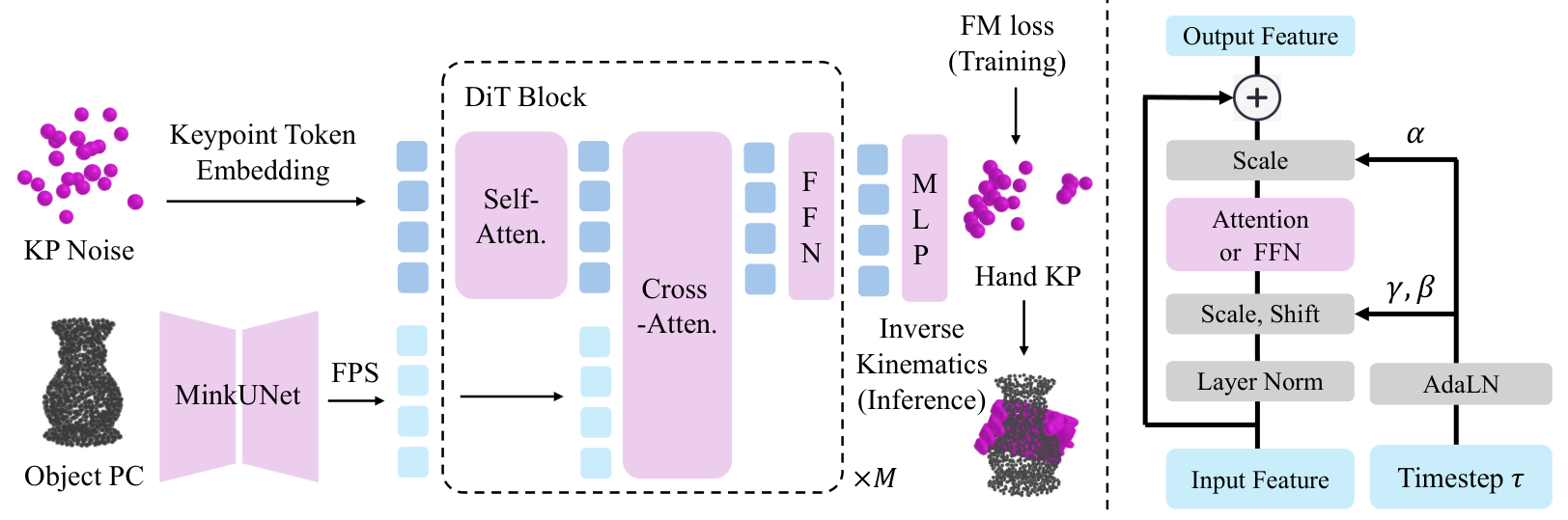
1. Keypoints. Mechanical joints, fingertips, and palm anchors form a simple Euclidean output space.
2. Flow matching. A conditional DiT maps Gaussian keypoints to object-aware grasp samples.
3. Hand pose. Rigid registration and inverse kinematics recover an executable hand configuration.
Evaluation on Dexonomy, cross-dataset benchmarks, and real-world robot experiments.